

WORKSHOP ON DEMAND FLEXIBILITY AND POWER SYSTEM ANALYTICS
📍Imperial College London
🗓️17th and 18th November
ORGANIZED BY



OVERVIEW
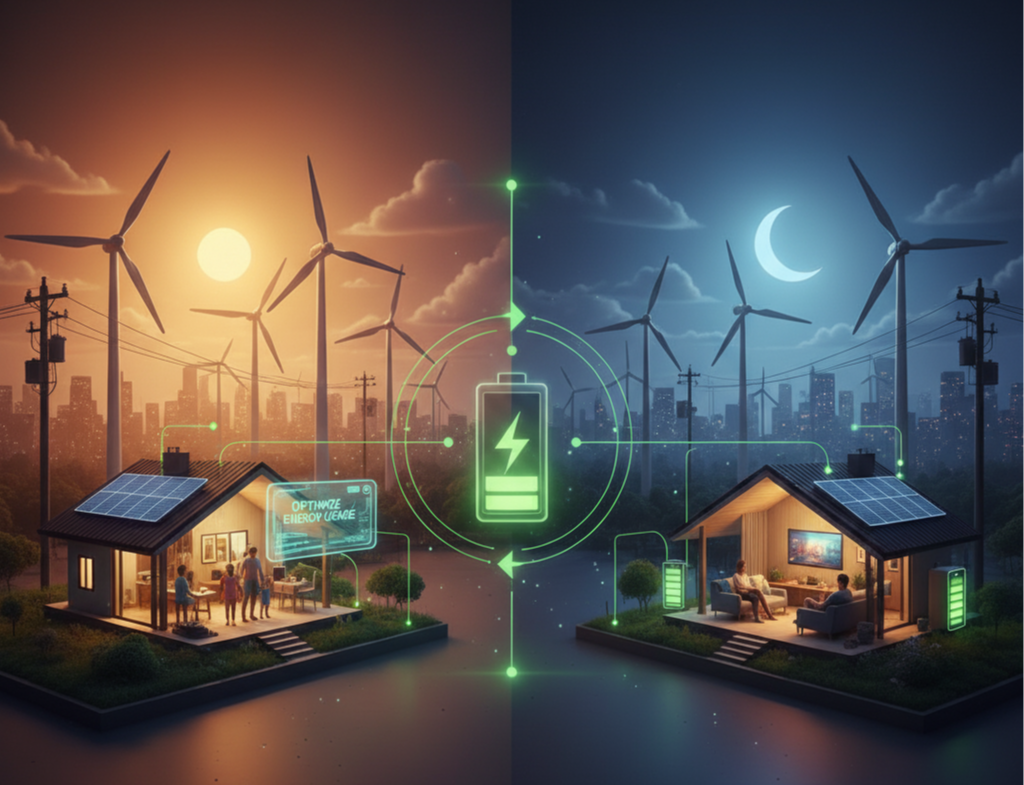
Imperial College London, in collaboration with IIT Bombay and MP Ensystems Advisory Pvt Ltd, is convening a workshop to strengthen research partnerships on demand flexibility, resource adequacy, and power market design for renewable energy integration. The workshop will bring together experts from India and the UK to exchange insights on regulatory frameworks and technological innovations. It aims to foster cross-learning and shape pathways for regulatory sandboxes and data-driven solutions toward a more flexible, sustainable power system.
Our Participants

Regulators

Academia

System Operators

Practitioners

Researchers

Start-Up Community
Agenda
Welcome Note | Imperial
Introductions | All participants
Context-setting | MP Ensystems | Imperial | IIT Bombay
Indian and UK Power sector – An introduction
Indian Power Sector
 Prof. Suryanarayana Doolla
| IIT Bombay | Professor
Prof. Suryanarayana Doolla
| IIT Bombay | Professor
UK Power Sector
 Prof. Richard Green
| Imperial College London | Professor
Prof. Richard Green
| Imperial College London | Professor
Regulatory structures in India- experiences and innovations
 Dr. Sushanta K. Chatterjee
| Hon’ble Central Electricity Regulatory Commission (CERC) | Chief (Regulatory Affairs)
Dr. Sushanta K. Chatterjee
| Hon’ble Central Electricity Regulatory Commission (CERC) | Chief (Regulatory Affairs)
Tea Break
Reforms in Indian power sector - Innovations through Demand Flexibility (DF), Resources Adequacy (RA), Power Markets
 Dr. Mahesh Patankar
| MP Ensystems | Founder & Managing Director
Dr. Mahesh Patankar
| MP Ensystems | Founder & Managing Director
Data science applications in power sector
 Abhishek Ranjan
| BRPL | CEO
Abhishek Ranjan
| BRPL | CEO
Reflections from the Indian regulatory perspective
 Shri. P. Ravi Kumar
| Hon’ble KERC | Chairperson
Shri. P. Ravi Kumar
| Hon’ble KERC | Chairperson
UK power market design and regulation
 Dan Roberts
| Frontier Economics | Director
Dan Roberts
| Frontier Economics | Director
 Alex Howard
| UK Power Networks - DSO | Head of Flexibility Markets
Alex Howard
| UK Power Networks - DSO | Head of Flexibility Markets
Research on power sectors and flexibility | Session 1
 Andrew Schein
| Centre for Net Zero | Director of Trials and Analysis
Andrew Schein
| Centre for Net Zero | Director of Trials and Analysis
 Dr. Shefali Khanna
| London School of Economics | Research Fellow
Dr. Mahesh Patankar
| MP Ensystems | Founder & Managing Director
Dr. Shefali Khanna
| London School of Economics | Research Fellow
Dr. Mahesh Patankar
| MP Ensystems | Founder & Managing Director
 Kaustubh Arekar
| MP Ensystems | Manager - Power Utilities
Kaustubh Arekar
| MP Ensystems | Manager - Power Utilities
Special Remarks
 Dr. Reena Ambekar
| VJTI, Mumbai | Senior Research Fellow,
CoE CNDS Lab
Dr. Reena Ambekar
| VJTI, Mumbai | Senior Research Fellow,
CoE CNDS Lab
Lunch Break
Research on power sectors and flexibility | Session 2
 Dr. Elina Spyrou
| Imperial College London | Assistant Professor
Dr. Elina Spyrou
| Imperial College London | Assistant Professor
 Prof. Zakir Rather
| IIT Bombay | Professor
Prof. Suryanarayana Doolla
| IIT Bombay | Professor
Prof. Zakir Rather
| IIT Bombay | Professor
Prof. Suryanarayana Doolla
| IIT Bombay | Professor
Data Science, flexibility and Utility operations
 Steven Steer
|Zuhike Group | Parincipal Data Consultant
Steven Steer
|Zuhike Group | Parincipal Data Consultant
 Deepak Malhotra
| Infosys Consulting | Partner - Utilities
Deepak Malhotra
| Infosys Consulting | Partner - Utilities
 Dr. Nilesh Kane
| TATA Power Company Ltd | Chief Distribution, Mumbai Operation
Dr. Nilesh Kane
| TATA Power Company Ltd | Chief Distribution, Mumbai Operation
Digital Energy Grid (DEG) and India Energy Stack (IES)
DEG
 Sujith Nair
| Foundation for Interoperability in Digital Economy (FIDE) | CEO
Sujith Nair
| Foundation for Interoperability in Digital Economy (FIDE) | CEO
IES
 Dr. Rishabh Jain
| FSR Global | Head of Research and Development
Dr. Rishabh Jain
| FSR Global | Head of Research and Development
Reflections from the Indian regulatory perspective
 Dr. Mallela Venkateswara Rao
| Hon’ble West Bengal Electricity
Regulatory Commission (WBERC) | Chairperson
Dr. Mallela Venkateswara Rao
| Hon’ble West Bengal Electricity
Regulatory Commission (WBERC) | Chairperson
Refreshment Break
Collaborative opportunities between Indian and UK regulators, power sector stakeholders and global experts
Panel discussion by:
 Rhys Oliver| Department for Energy Security and Net Zero | Smart Energy Analyst
  Shri. P. Ravi. Kumar| Hon'ble KERC | ChairpersonDr. Mallela Venkateswara Rao| Hon'ble WBERC | Chairperson
 Dr. Rajendra G. Ambekar| Hon'ble MERC | Secretary
 Prof. Ralf Martin| World Bank IFC | Professor
 Amit Khare| Sequoia Climate Foundation | Program Manager
Moderated by:
 Prof. Mark O’ Malley | Imperial College London | Professor Dr. Mahesh Patankar| MP Ensystems | Founder & Managing Director


Event Summary

The DF workshop opened by framing the shared challenge of integrating high volumes of renewable energy into increasingly complex power systems, particularly in the context of India’s rising cooling demand and the UK’s ongoing market evolution. The discussions highlighted the importance of building flexible, data-driven, and resilient grids supported by digital public infrastructure and strong coordination across regulators, utilities, academia, and industry.
Both India and the U.K.’s power sector structures and transitions were outlined, with India’s rapid demand growth and renewable expansion contrasted with the UK’s long-standing market reforms and shift away from coal. Across contexts, demand flexibility emerged as a critical tool for ensuring system stability, managing variability, and improving operational efficiency. The sessions on regulatory and market reforms focused on the frameworks shaping renewable integration and flexibility in India, including Resource Adequacy, updated grid codes, ancillary services, DF regulations, and emerging mechanisms such as capacity markets and centralised dispatch. Participants emphasised the need to understand consumer price elasticity, improve DISCOM financial health, and prioritise sectors like EV charging, buildings, and public water systems where flexibility potential is high. In parallel, deliberations on the UK market highlighted the current role and future potential of demand-side participation across wholesale markets, grid services, and capacity mechanisms, while identifying barriers in market design, settlement structures, and product rules that need to evolve to unlock greater flexibility.
The research sessions showcased advances in modelling, forecasting, and behavioural insights, including AI-driven optimisation of EV charging and heating loads, smart scheduling tools for electric buses, and demand flexibility model that integrates consumer responsiveness and techno-economic feasibility for utilities. The research findings also highlighted that flexibility must span generation, networks, storage, and demand, supported by transparent access to information on system imbalances and improved data-sharing standards.
Data science and digitalisation emerged as central themes, with sessions illustrating how smart meter data, SCADA systems, weather information, and market signals can revolutionise utility operations through digital twins, predictive maintenance, dynamic pricing, and enhanced forecasting. The importance of interoperability, regulatory clarity, and institutional readiness was highlighted, along with evolving digital public infrastructure such as Digital Energy Grid and India Energy Stack.
The cross-country panels including experts and regulators from India and the U.K. identified clear pathways for collaboration, including joint capacity-building programmes, dedicated pilots, common data standards, shared analytical tools, and a proposed UK–India Flexibility Forum. The key areas for joint study can include baseline methodologies, performance metrics, consumer incentives, and implementation frameworks. The concluding sessions reinforced the need for collaborative, evidence-driven solutions, regulatory innovation, and sustained engagement to enable resilient, consumer-centric power systems capable of supporting high renewable energy futures.


